
Breast implant replacement is not required for everyone and depends on the condition of your implants, your body, and your aesthetic goals. Breast implants are long-lasting, but they are not considered lifetime devices. If you currently have implants—or are noticing changes in them—you may be wondering whether replacement is recommended.
Do Breast Implants Need To Be Replaced?
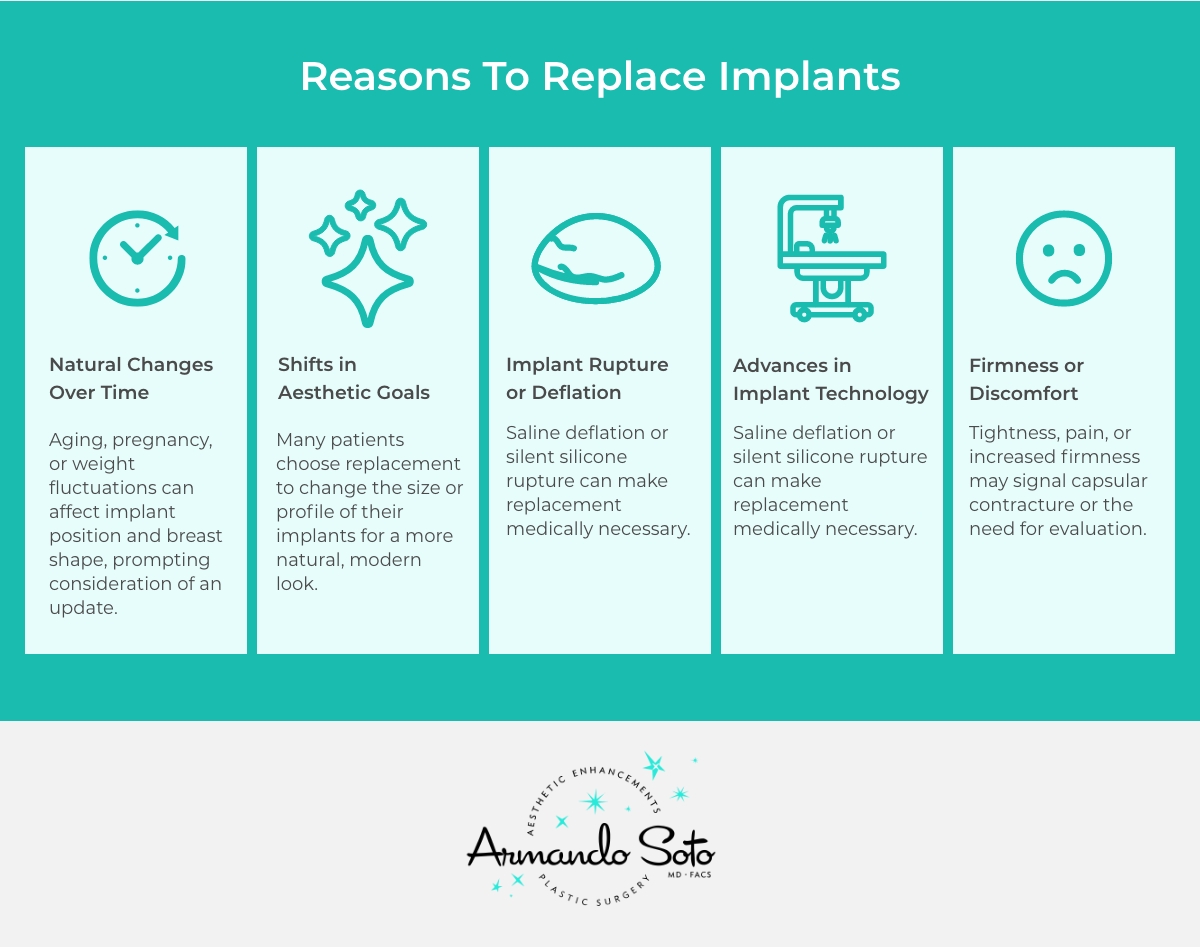
Breast implants do not need to be replaced on a set schedule, but they are not designed to last a lifetime. Many patients enjoy their results for 10 to 20 years or longer after breast augmentation surgery. While there is no required replacement timeline, implants that are 15 years old or older are often evaluated more closely, and replacement may be recommended due to normal implant aging, even in the absence of symptoms. However, replacement may be recommended if:
- The implant has ruptured or deflated
- The shape or position has changed over time
- You experience discomfort or firmness
- Your aesthetic preferences have evolved
Routine monitoring and open communication with your plastic surgeon are essential for long-term implant health.
Signs It May Be Time for Breast Implant Replacement
Sometimes, breast revision surgery is needed to correct a complication. Many of these complications are easily visible, such as capsular contracture or bottoming out, while others may develop without obvious symptoms.
With silicone breast implants, rupture is often “silent,” meaning you may not feel or see any changes. For this reason, the FDA recommends routine imaging with ultrasound or MRI beginning 5 to 6 years after placement, with follow-up scans every 2 to 3 years, to help monitor implant integrity and identify issues early.
Changes in Shape or Position
Over time, implants may shift due to factors such as aging, gravity, pregnancy, or weight fluctuations. This can lead to asymmetry, sagging, or an unnatural contour that no longer reflects your original results.
Increased Firmness or Tightness
Capsular contracture—when scar tissue tightens around the implant—can cause firmness, discomfort, or visible distortion of the breast. In some cases, implant replacement is advised to restore softness and comfort.
Discomfort or Pain
Breast implants should feel comfortable. You should always seek your doctor’s advice if you have persistent tightness, aching, or tenderness, even if your implants are many years old.
Implant Rupture or Deflation
Saline implants deflate quickly when ruptured, while silicone ruptures may be “silent.” Regular imaging, such as MRI or ultrasound, helps identify issues early.
Cosmetic Reasons To Update Breast Implants
Your aesthetic goals may change over time—and that is completely normal. Patients often consider replacement to:
- Change implant size (larger or smaller)
- Switch implant type (saline to silicone or vice versa)
- Achieve a more natural, modern shape
- Combine implant replacement with a breast lift
Breast implant replacement is an opportunity to refine your results so they better align with how you want to look and feel today.
How Modern Implant Technology Has Improved Results
Today’s breast implants are designed with enhanced safety, durability, and aesthetics in mind. Advances include:
- More cohesive silicone gel for a natural look and feel
- Improved implant shells for longevity
- Expanded shape and profile options
- Better surgical techniques that reduce complication risks
These advancements enable more personalized and natural-looking outcomes while prioritizing patient safety.
Expertise Matters in Breast Implant Replacement
Choosing the right surgeon is one of the most important decisions you will make. Dr. Armando Soto is a board-certified plastic surgeon recognized for his meticulous technique, safety-focused approach, and dedication to achieving elegant, natural-looking results.
Every implant replacement procedure begins with a customized consultation, during which your anatomy, implant history, and goals are carefully evaluated to create a personalized treatment plan.
WARNING:
This feature contains nudity. Please click OK to confirm you are at least 18 years of age and are not offended by such material.


Is It Time To Explore Your Options?
If you are noticing changes or simply questioning whether your implants still serve you, it may be time to explore your options. Request a consultation with Dr. Soto by using the online form or calling us at (407) 218-4550.
Leave a Reply