While waiting for your toned, taut tummy to reveal itself after a tummy tuck, it’s important to remember that your recovery requires patience and careful management for the best results.
Most patients reach full recovery within 4 to 6 weeks, though individual healing rates vary and complete scar maturation can take up to a year. Taking the time to mentally and physically prepare before surgery can make a meaningful difference in how smoothly that process goes. To help you know what to expect at every stage, we break down the tummy tuck recovery timeline below.
How Long Is Tummy Tuck Recovery?
Recovery from a tummy tuck unfolds in stages, with each phase bringing noticeable changes in comfort, mobility, and appearance. While the first 4 to 6 weeks are when most healing occurs, understanding what to expect at each stage helps you stay on track and recognize what’s normal. Here’s a week-by-week look at the tummy tuck healing stages.
Tummy Tuck Recovery Week by Week
Every patient heals at their own pace, but knowing what typically happens each week can help you set realistic expectations and feel confident in your progress. Here’s what most patients experience from the first days after surgery through full recovery.
Week 1: Starting Your Recovery Off Right
Your first week sets the foundation for everything that follows. Day 1 after surgery, most patients feel sore and fatigued — this is completely normal. Focus on rest, gentle movement, and following Dr. Soto’s post-operative instructions closely.
What To Expect
- Swelling, bruising, and discomfort are at their peak
- Fatigue makes even small tasks feel challenging
- Limited mobility; standing fully upright may be uncomfortable
- Drainage tubes may still be in place (if applicable)
How To Manage
- Take prescribed pain medication as directed Arrange for help with daily activities
- Wear your compression garment continuously as directed
- Keep the surgical area clean and dry per Dr. Soto’s wound care instructions
- Begin short, gentle walks as soon as you feel able to support circulation
Week 2: Building Momentum
Discomfort begins to ease this week, and most patients feel noticeably more mobile. Many with desk jobs start thinking about returning to work by the end of this phase.
What To Expect
- Pain and swelling begin to decrease
- Mobility improves; showering and dressing become easier
- Energy levels remain lower than normal
- Some patients return to light, non-physical work
How To Manage
- Continue medications as prescribed
- Maintain a balanced diet and stay well hydrated to support healing
- Avoid heavy lifting and strenuous activity Watch for signs of infection such as increased redness, swelling, or fever
Week 3: Easing Back In
By week 3, most patients are feeling significantly better and are eager to resume their normal routines. This is the time to reintroduce activity gradually—not all at once.
What To Expect
- Swelling and bruising continue to subside Tightness in the abdomen may still be present when standing
- Appetite and sleep patterns begin to normalize
How To Manage
- Reintroduce normal daily activities slowly and cautiously
- Avoid heavy lifting and intense exercise until cleared by Dr. Soto
- Continue wearing your compression garment as advised
- Attend scheduled follow-up appointments to assess healing progress
Week 4: A Clearer Preview of Your Results
Tummy tuck recovery at week 4 often brings a welcome turning point. Swelling has reduced enough that your new contour is becoming visible, and energy levels are returning closer to normal.
What To Expect
- Significant reduction in swelling and bruising Early results are visible as swelling continues to resolve
- Energy levels improving noticeably
- Scars are still healing and may appear pink or raised
How To Manage
- Continue easing into normal activities as tolerated
- Resist the urge to push physical limits prematurely
- Maintain follow-up appointments with Dr. Soto Begin scar care protocols as directed
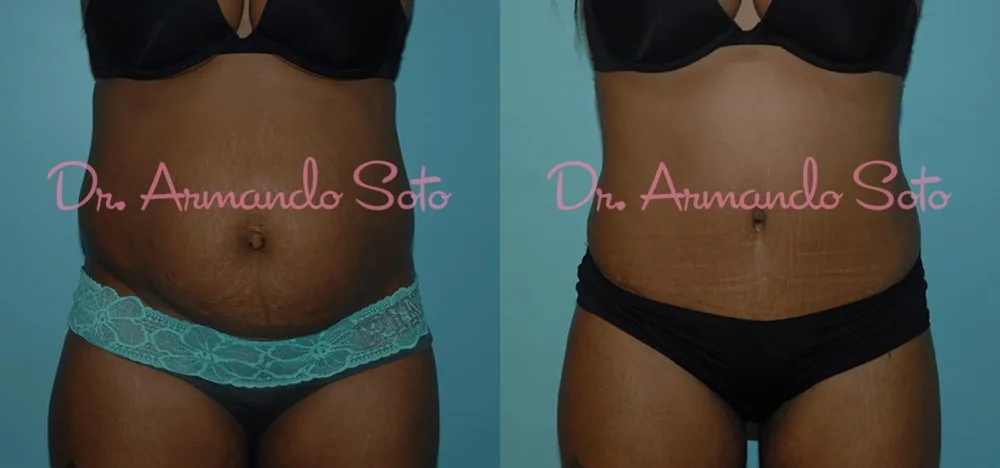
Tummy Tuck Before and After by Dr. Armando Soto in Orlando, Florida
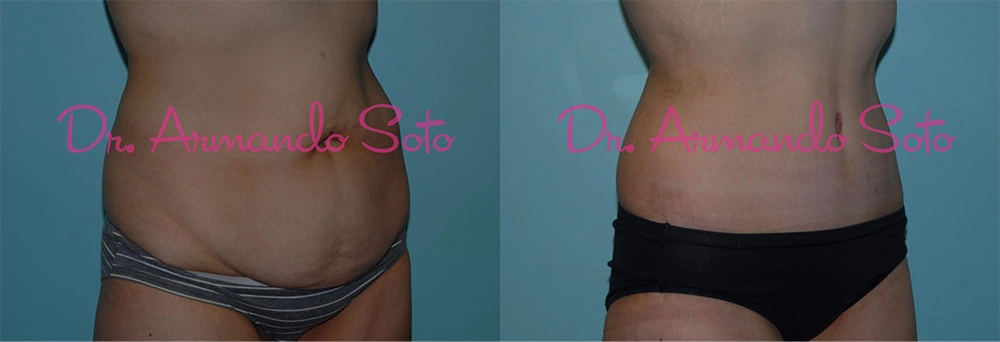
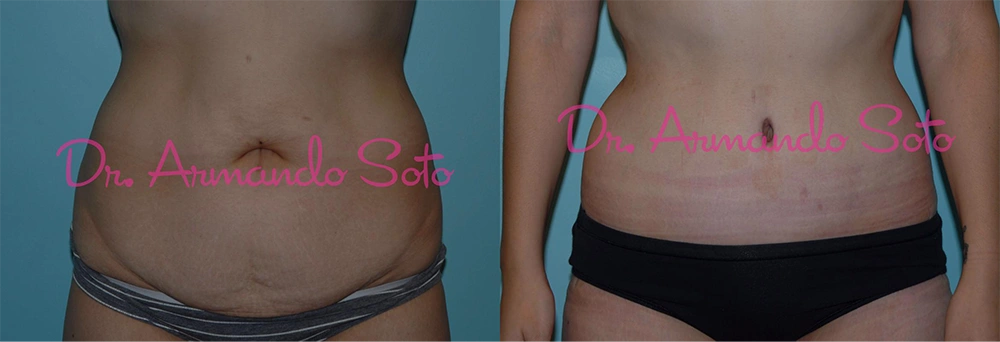
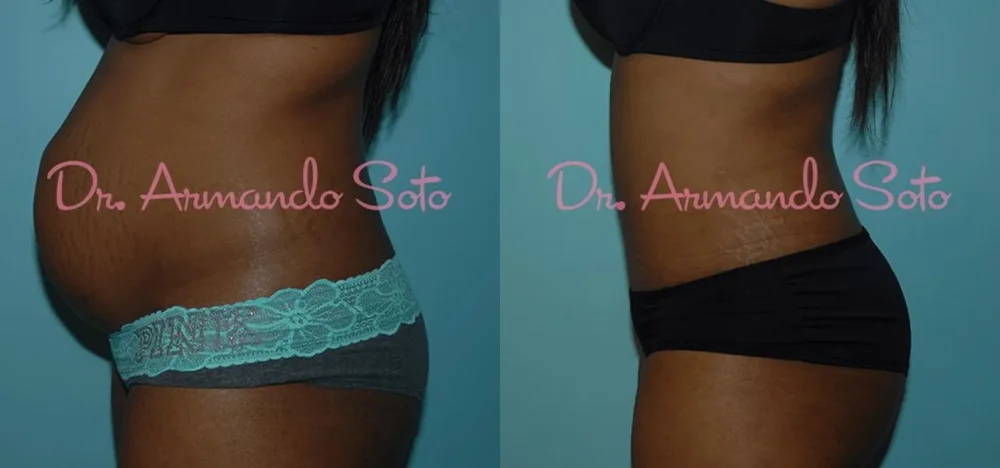
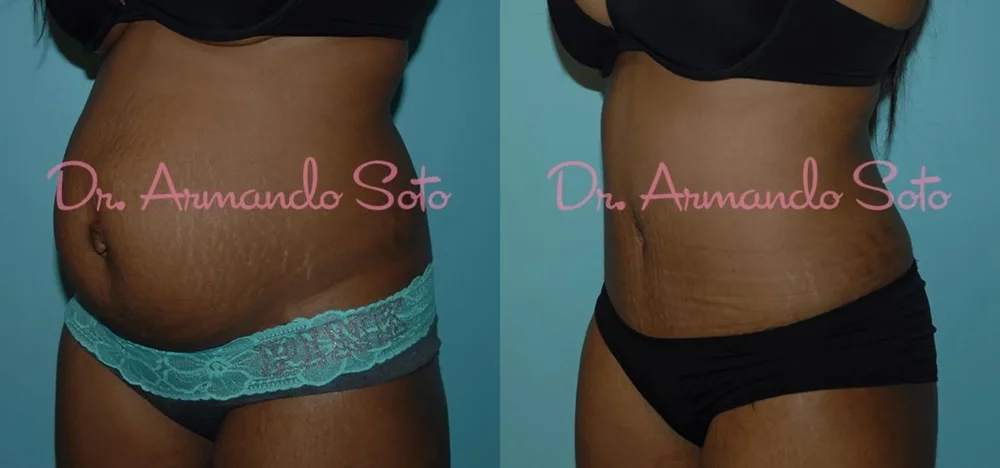
Weeks 5 and 6: Increased Mobility and Strength
Most patients feel like themselves again by this phase. You are nearing the end of initial recovery, and more physical activity is within reach.
What To Expect
- Most swelling has subsided; results are more clearly defined
- Scars may still be pink and slightly raised Stamina and strength are returning Compression garment use may be tapering
How To Manage
- Gradually resume more physical activities, listening to your body
- Continue scar care as directed, which may include silicone sheets or topical treatments Avoid high-impact exercise until cleared by Dr. Soto
- Follow Dr. Soto’s guidance on when to discontinue compression garment use
Weeks 7 and 8: Nearing Full Recovery
By weeks 7 and 8, most patients have returned to their regular routines and are cleared for moderate exercise. Your results are well established, and the focus shifts to longer-term maintenance.
What To Expect
- Feeling strong and active with minimal residual swelling
- Scars continuing to fade and flatten
- Results are clearly visible and continue to refine
How To Manage
- Resume most regular activities, including moderate exercise
- Maintain scar refinement protocols, such as massage or silicone sheets
- Consult Dr. Soto before returning to high-impact or strenuous activities
Beyond Week 8: Long-Term Recovery
Initial recovery is behind you, but your results will continue to improve for months to come. Final results are typically visible between 6 months and a year after surgery, with scars continuing to fade throughout.
What To Expect
- Full recovery; all pre-surgery activities can be resumed
- Scars fading and flattening over time
- Final contour visible by 6 months to 1 year post-surgery
How To Manage
- Maintain a healthy lifestyle to preserve your results long term
- Continue scar care as needed per Dr. Soto’s recommendations
- Regular exercise and a balanced diet are key to sustained results
While the timeline above reflects what most patients experience, Dr. Soto and his team will monitor your healing closely at every follow-up and adjust your aftercare guidance as needed. If you ever have questions or concerns between appointments, don’t hesitate to contact us.
Tips for a Smooth Recovery
Following Dr. Soto’s post-operative instructions is the single most important thing you can do to support your healing. Beyond that, a few habits can make a meaningful difference in how comfortably and efficiently your recovery progresses.
- Wear your compression garment for the full duration recommended, even when you start feeling better
- Get up and move gently in the first days after surgery to support circulation and reduce the risk of blood clots
- Stay well hydrated and eat a nutrient-rich diet to give your body the resources it needs to heal
- Avoid smoking before and after surgery, as it significantly impairs the healing process
- Rest when your body tells you to, and resist the urge to return to normal activity too soon
- Arrange help at home in advance, particularly for the first week when mobility is most limited
Long-term results require long-term commitment. Once you’ve cleared initial recovery, maintaining a stable weight through regular exercise and a balanced diet will help you enjoy your results for years to come. For more on what that looks like in practice, read How To Maintain a Flat Stomach After a Tummy Tuck.
Tummy Tuck Recovery FAQs
How long do I need to take off work after a tummy tuck?
The amount of time you’ll need away from work depends on the nature of your job. Patients with desk jobs can often return within 2 to 3 weeks. Those with physically demanding jobs involving lifting, bending, or extended time on their feet should plan for 4 to 6 weeks before returning. During your consultation, Dr. Soto will review your procedure plan and daily routine and provide personalized guidance on timing.
What does no one tell you about a tummy tuck?
Most patients are prepared for swelling and soreness, but a few things tend to catch people off guard. Numbness or altered sensation in the abdominal skin is common and can persist for several months as the nerves heal. Some patients also experience tightness or a feeling of being pulled when standing upright in the early weeks, which gradually resolves as tissues relax. Emotionally, patience is key — swelling can make it difficult to appreciate your results right away. Trusting the process and following Dr. Soto’s aftercare instructions will help you get the most from your outcome.
What does a tummy tuck look like after 3 months?
At the 3-month mark, most patients are well into enjoying their results. Swelling has largely resolved, and your abdominal contour will be close to its final appearance. Your scar will still be maturing and may appear pink or slightly raised, but it will continue to fade and flatten over the course of the first year. Most patients find the scar sits low enough to be covered by underwear and swimwear, and many report a significant boost in confidence by this stage.
Start Your Tummy Tuck Transformation
Ready to take the next step? Please request a consultation or call us at (407) 218-4550 to explore your body contouring options.
This blog post was originally published in August 2024 and updated in June 2026.